


- Qazi Hassam Mehmood
- 14 Apr 2026
- Market Trends and Analysis
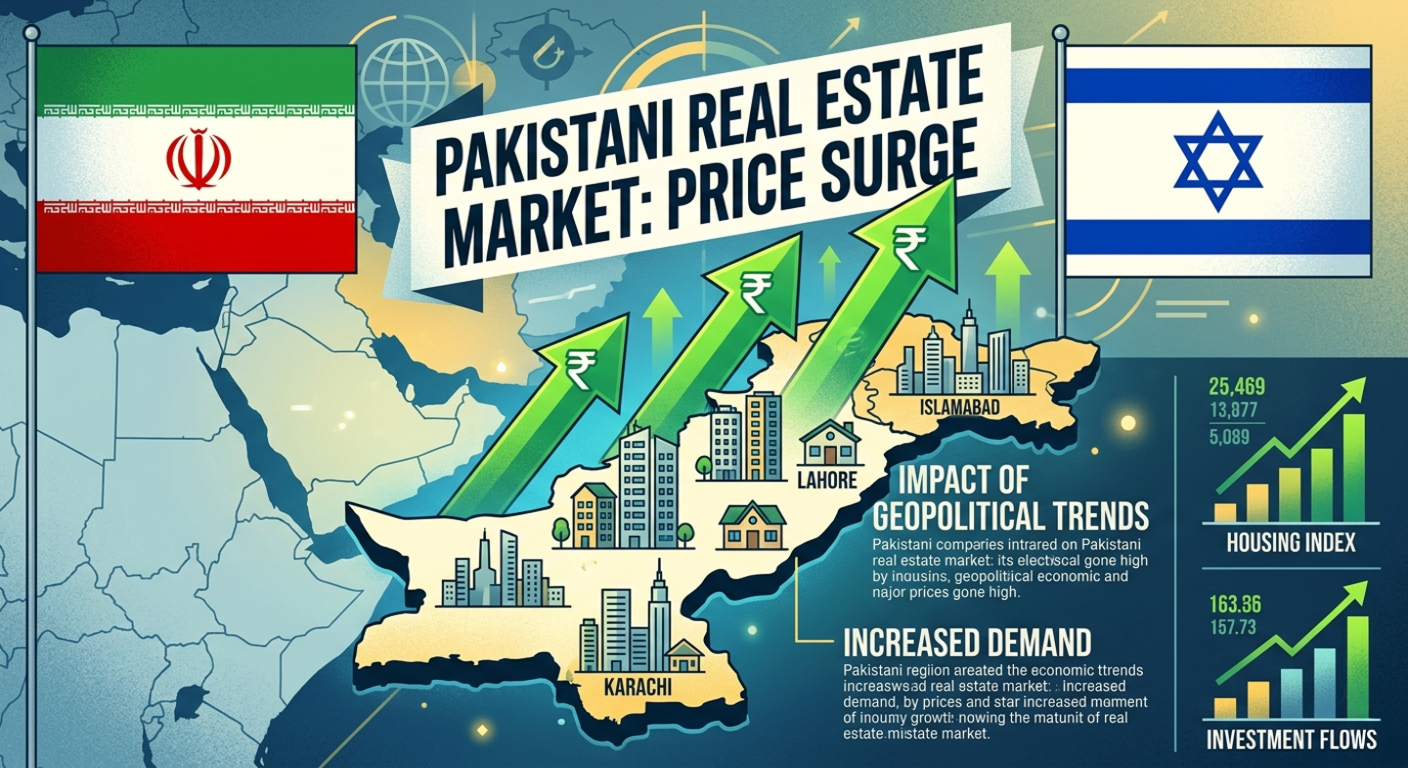
Iran–Israel War 2026: Impact on Real Estate in Pakistan & Key Market Factors
The ongoing Iran–Israel War 2026 has created fresh economic uncertainty across the globe. While the conflict is centered in the Middle East, its effects are clearly visible in Pakistan, particularly in the real estate sector of Azad Jammu and Kashmir (AJK) and Mirpur.
AJK’s property market, which heavily depends on overseas remittances, oil prices, inflation, and investor confidence, is currently facing both short-term challenges and long-term structural shifts. Investors looking to enter the market should also understand the legal and verification process explained in AJK Property Laws and How to Verify Property Ownership in AJK before making any decision.
This guide analyzes how the ongoing conflict is influencing Pakistan’s real estate market, with a special focus on Mirpur and surrounding AJK regions.
Global Shockwaves and Pakistan’s Vulnerability
The war has caused a sharp rise in global oil prices due to tensions around the Strait of Hormuz, a critical route that handles nearly 20% of the world’s oil supply.
For Pakistan, being a major oil-importing country, this has resulted in:
- Increased inflation
- Rupee depreciation
- Higher construction costs
Global market insights and oil trends can also be tracked through international energy reports published by the International Energy Agency, which highlight how geopolitical conflicts impact economic stability.
How the Conflict Is Affecting AJK Real Estate (Mirpur Focus)
Mirpur, often called “Little England,” remains one of the most active real estate markets in AJK due to strong UK-based Kashmiri diaspora investment.
However, the current situation is impacting the market in multiple ways.
1. Short-Term Slowdown
Investor caution has increased significantly. Many overseas Pakistanis are adopting a wait-and-see approach.
This has resulted in:
- Reduced property transactions in Mirpur
- Temporary price corrections in plots and files
- Slower sales activity in major housing projects
Even investors exploring Mirpur AJK property listings are currently focusing more on research rather than immediate buying.
2. Rising Construction Costs
Higher fuel prices have directly increased the cost of construction materials such as:
- Cement
- Steel
- Transportation
As a result:
- Ongoing projects are facing delays
- New construction has become more expensive
- Final prices of houses and apartments are increasing
This trend is particularly visible in Mirpur, Kotli, and Bhimber.
3. Remittance Uncertainty
AJK’s real estate market is strongly dependent on overseas remittances, especially from the UK and Gulf countries.
Any economic instability in these regions can lead to:
- Reduced remittance inflow
- Lower property demand
- Delayed investment decisions
This factor remains one of the most critical drivers of property prices in Mirpur.
4. Rental Market Stability
Despite the slowdown in buying activity, the rental market remains relatively stable.
Apartments and houses near:
- City centers
- Educational institutions
- Mangla Dam
continue to generate consistent rental demand, especially from professionals and visiting overseas families.
Investors interested in income-based properties are increasingly shifting toward rental-focused investments instead of speculative buying.
Long-Term Outlook for AJK Real Estate
Challenges
- Prolonged inflation may increase construction costs further
- Investor confidence may take time to recover
- Overseas investment flow may remain uncertain in the short term
Opportunities
- Mirpur may emerge as a relatively stable investment destination
- Increased demand for rental-income properties such as apartments
- Strong market recovery potential once geopolitical tensions ease
Historically, Mirpur’s property market has shown resilience due to its strong emotional and financial connection with the overseas Kashmiri community.
Key Factors Influencing AJK Real Estate Market (2026)
1. Oil Prices and Inflation
Rising fuel prices increase construction costs and property prices.
2. Overseas Remittances
The most important driver of AJK real estate demand.
3. Political and Economic Stability
Investor confidence depends heavily on stability.
4. Interest Rates
High interest rates reduce new investment activity.
5. Supply and Demand
Short-term slowdown but strong long-term potential.
Understanding these factors is essential before making any investment decision in AJK.
What Should AJK Investors Do in 2026?
Smart investors are currently adopting a cautious yet strategic approach.
Recommended strategies include:
- Avoid panic selling of valuable assets
- Invest only in legally verified properties
- Focus on rental-yielding apartments in prime areas
- Prefer established housing societies with proper approvals
- Take a long-term investment view of 5–10 years
Before investing, it is strongly recommended to review Cost of Buying Property in Mirpur AJK 2026 to understand the full financial requirements involved in property transactions.
The Iran–Israel War 2026 has created short-term challenges for Pakistan’s real estate sector, including rising costs and reduced transaction activity.
However, the core strengths of Mirpur’s real estate market remain intact:
- Strong overseas diaspora connection
- Consistent rental demand
- Long-term investment potential
Real estate in AJK continues to be a solid long-term investment. Investors who focus on legal verification, proper research, and strategic planning will be in a strong position once market stability returns.
For those looking to explore current opportunities, reviewing verified property listings in Mirpur AJK can provide a clearer picture of market trends and available investments.